应用场景

从厂房到海上风电,各有各的关注点

The same platform, completely different concerns per engineering domain: building structures worry about inter-storey drift and overall stability, bridges about moving loads and fatigue, offshore wind about frequency separation, geotechnical and underground works about deformation control, earthquake engineering about nonlinear response. Below, organised by engineering type — buildings, bridges, offshore wind, geotechnical, underground and seismic engineering — is how you would actually put the tool to work. Not a case gallery, but how you would use it.

这不是案例集。Kavvo 还没有发布版本,也没有真实客户项目——编几个「某厂房项目」写上来是很容易的事,但那是假的。下面是按工程类型整理的建模路径:你会怎么用它,以及哪一步最容易错。

Portal frame industrial building:Tapered members, lightweight roof, wind uplift governed
01Tapered members, lightweight roof, wind uplift governed

Portal frame industrial building

结构形式
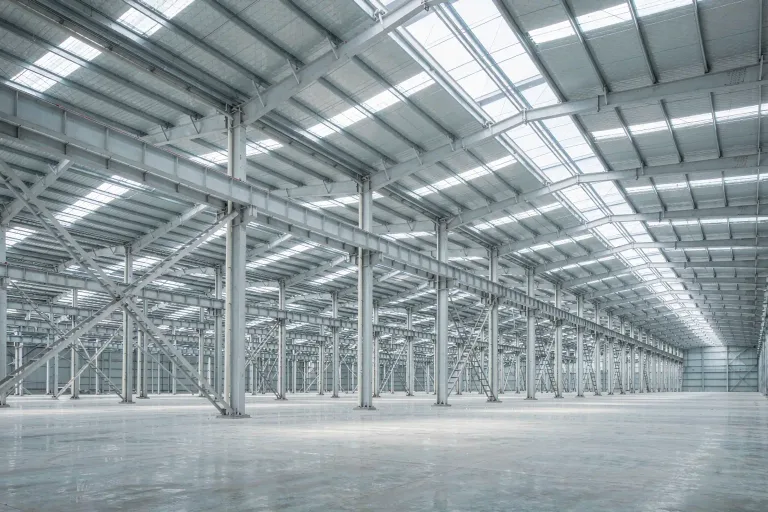
Single-storey portal frame with tapered columns and rafters, plus purlins, column ties and roof bracing
分析类型
Static (dead / live / wind / crane) · Modal · Buckling (tapered column stability)
产出
Internal force envelopes, column-top drift, purlin and bracing forces, base reactions, calculation report

容易错的地方

  • Model tapered members in segments — a single prismatic member overestimates stiffness
  • Wind pressure coefficients must be zoned (windward / leeward / roof zones); a single value will not do
  • Do not assume stressed-skin (diaphragm) action by default — only with reliable evidence for the sheeting and its fixings

Modelling sequence and three pitfalls →

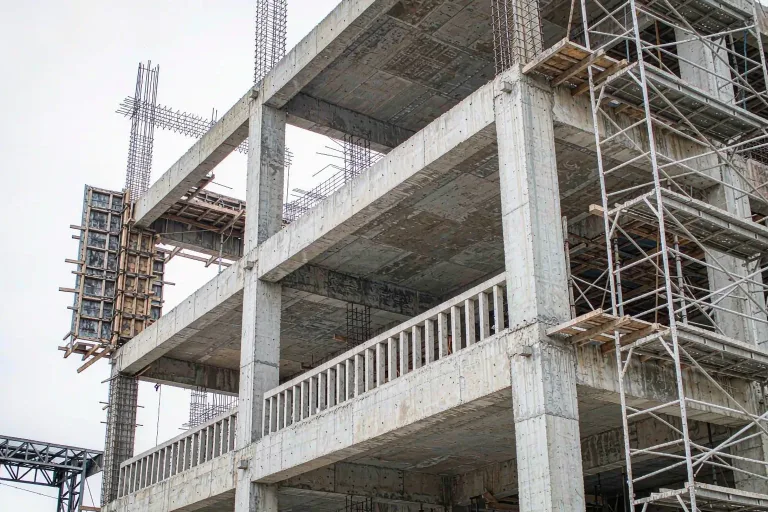
Multi-storey frame:Inter-storey drift and floor diaphragm assumptions
02Inter-storey drift and floor diaphragm assumptions

Multi-storey frame

结构形式
RC or steel frame with rigid beam-column joints, floors working with the frame
分析类型
Static · Modal · Response spectrum · Pushover · Time-history
产出
Inter-storey drift, member forces, reinforcement design basis, performance point, calculation report

容易错的地方

  • Rigid diaphragm assumptions hold only for regular structures; with large openings or long cantilevers, model the floors as flexible
  • Short-column effects come from infill wall restraint — if the walls are not in the model, judge them by hand
  • Concrete tension stiffening must not be skipped — cracked beam-end stiffness and natural periods both change

Concrete and confined concrete →

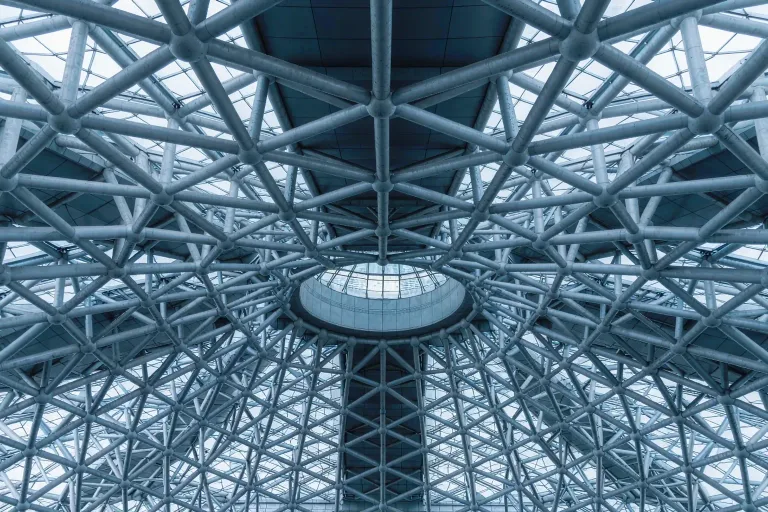
Long-span space frames and roofs:Overall stability and thermal actions
03Overall stability and thermal actions

Long-span space frames and roofs

结构形式
Double-layer space grids, tubular trusses and beam-string structures, mostly pin-jointed
分析类型
Static · Buckling (overall stability) · Modal · Geometric nonlinearity
产出
Member forces and stress ratios, joint displacements, overall stability factor, support reactions

容易错的地方

  • Members are pinned by assumption; verify joint moments separately — do not detail joints straight from pin-jointed results
  • Thermal actions cannot be skipped: temperature forces in long-span structures are often of the same order as dead load
  • Second-order effects are mandatory for long spans; the linear buckling factor is only an upper bound

Choosing a solver →

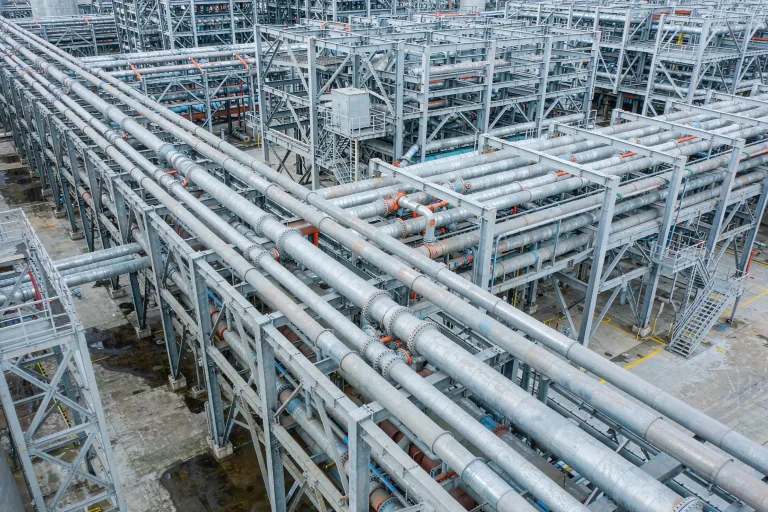
Equipment supports and pipe racks:Equipment resonance and thermal expansion thrusts
04Equipment resonance and thermal expansion thrusts

Equipment supports and pipe racks

结构形式
Steel support frames, multi-tier pipe racks, equipment foundations and pedestals
分析类型
Static (equipment loads / pipe thrusts) · Modal (frequency separation) · Seismic
产出
Support forces, structural frequencies, anchor bolt and foundation reactions, displacements

容易错的地方

  • Check dynamic equipment loads against resonance: structural frequencies should stay clear of the equipment's operating frequency
  • Pipe thermal expansion thrusts are often missed — they can govern support sizing
  • Anchor bolt reactions feed foundation design; uplift load cases must be extracted separately

Units and quantities →

Steel truss and girder bridges:Moving loads and fatigue
05Moving loads and fatigue

Steel truss and girder bridges

结构形式
Steel trusses, plate girders and composite girders, with gusset plates and connections
分析类型
Static + moving loads · Stability · Modal · Fatigue (stress ranges)
产出
Force envelopes, deflections, stability checks, fatigue stress ranges, bearing reactions

容易错的地方

  • Moving loads need influence-line loading; hand-picking critical positions almost always goes wrong
  • Fatigue often governs — stress ranges must come from the actual traffic spectrum, not strength checks alone
  • Temperature and bearing restraint determine secondary forces; a wrong bearing assumption skews every result

Steel and reinforcement →

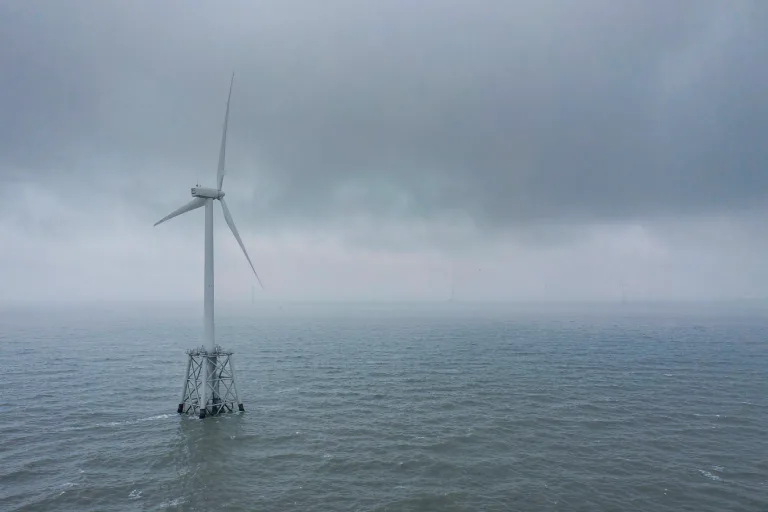
Offshore wind foundations:Frequency separation, pile–soil interaction, combined wave and current
06Frequency separation, pile–soil interaction, combined wave and current

Offshore wind foundations

On the roadmap (phase C1, sequential multiphysics iteration) — the current release does not include offshore wind coupled analysis.

结构形式
Jackets, monopiles, floating foundations
分析类型
Static + modal · Time-history (waves) · Pile–soil interaction · Fatigue
产出
Structural frequencies (clear of 1P / 3P bands), member stress ratios, pile reactions, fatigue life

容易错的地方

  • Frequencies must avoid the rotor 1P and blade 3P bands — this often governs the design more than strength does
  • Model pile–soil interaction with p-y springs, not fixed bases — soil flexibility directly shifts frequencies
  • Apply waves and current jointly, and use sections net of the corrosion allowance

Choosing a solver →
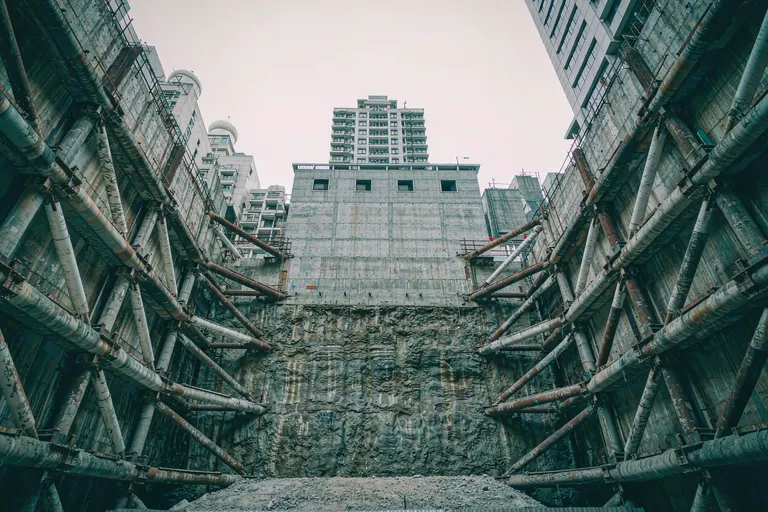
Deep excavation and retaining systems:Deformation control, staged excavation
07Deformation control, staged excavation

Deep excavation and retaining systems

结构形式
Deep excavation support systems: diaphragm walls or bored pile walls with internal struts or ground anchors, multi-level strutting in staged excavation
分析类型
Excavation stage simulation (stepwise activate / deactivate) · Retaining structure forces and deflections · Base heave and stability
产出
Wall horizontal displacements, strut axial forces, ground surface settlements behind the wall, calculation report

容易错的地方

  • Simulate excavation in stages, never in one step — the installation timing of each strutting level changes the load path
  • The soil constitutive model directly sets the deformation magnitude: linear elasticity markedly underestimates movements — soft soils need a model capturing plastic behaviour
  • Strut preload and the removal sequence affect the force envelope — do not omit the strut-removal stages

Geotechnical material selection →

Tunnel lining:Soil–structure interaction, load–structure method
08Soil–structure interaction, load–structure method

Tunnel lining

结构形式
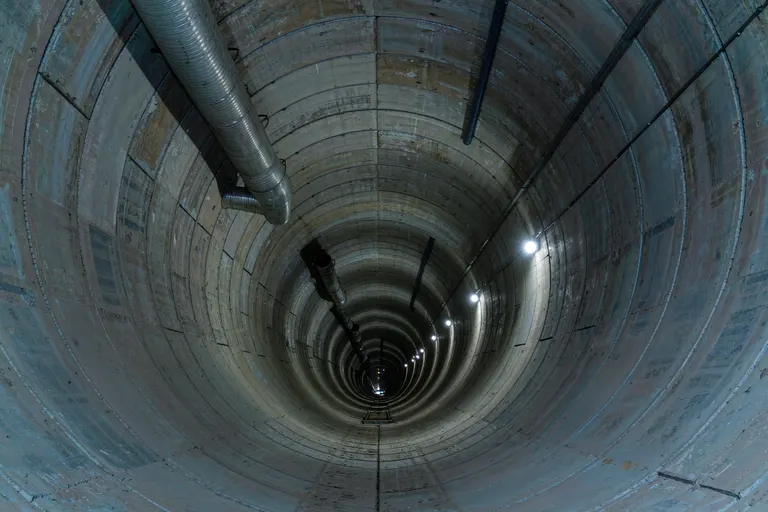
Composite tunnel lining sections: primary support + secondary lining, with rock mass classification and load models
分析类型
Section verification by the load–structure method · Rock pressure load cases · Seismic case (ground displacement method)
产出
Lining bending moment and axial force diagrams, safety factor verification, calculation report

容易错的地方

  • The load–structure method and the soil–structure (convergence–confinement) approach are two distinct routes; be clear which one your verification basis follows
  • Rock-mass subgrade reaction must not be applied over the full ring — only along segments in contact with the ground and in compression
  • The seismic incident angle and how ground displacements are imposed strongly affect the response magnitude

Choosing a solver →

Seismic isolation and energy dissipation:Period shift, energy dissipation checks
09Period shift, energy dissipation checks

Seismic isolation and energy dissipation

结构形式
Base-isolated or energy-dissipating structures: lead-rubber bearings / viscous dampers + superstructure
分析类型
Nonlinear time history (multiple records, bi- / tri-directional input) · Bearing compression–tension and displacement checks · Damping reduction factors and storey response comparison
产出
Bearing displacements and forces, storey shear comparison envelopes, calculation report

容易错的地方

  • Isolation models must take unreduced ground motions as input — the spectrum reduction convention differs from the fixed-base model
  • Bearing tension checks are often missed: vertical earthquake and overturning load cases can put bearings in tension
  • Design forces for damper connections and joints should be taken at the damper force corresponding to at least 1.2 times the rated stroke

Units and quantities →

Verification cases: 3 published, the rest tracking releases

The only credible evidence that a finite element solver is right is comparison against analytical solutions, tests and independent implementations. Every published case below includes model files, analysis settings, results and errors — download them and recompute. Cases not yet done are listed as they are; nothing is quietly removed.

算例对照对象校核内容状态
Cantilever beam in bending →Analytical solution δ=PL³/3EI (mechanics of materials)Tip deflection, section moment of inertia已公布
Portal frame →Nonlinear pushover self-consistency (yield mechanism / equilibrium checks)Base shear curve, plastic hinge locations已公布
Four-storey two-bay frame →Eigenvalues and storey drift distributionFundamental period, mode shapes, pushover mechanism已公布
Cantilever column bucklingEuler critical load analytical solutionFirst buckling eigenvalue and mode shape待 M1
SDOF time historyNewmark-β hand calculation / textbook examplePeak and phase of the displacement history待 M1
Independent comparison with commercial softwareThird-party results from independent modelling and independent solvingForce envelopes, column-top displacement, natural periods待 M1

已公布的算例都给出模型文件、分析设置、结果与误差——只给一张对比图不算验证,因为图看不出你改了哪些参数。去算例档案看全部 →

你的结构不在上面?

梁系与壳系都能建:梁、柱、支撑、桁架、板壳、索。上面这些只是最常见的几类。说说你的结构形式,我们可以一起看怎么建。